Pages

Wednesday, June 6, 2012

Highlights of Malta

By Anne Supsic

Published on Viator Travel Blog on June 6, 2012

Highlights of Malta

June 6, 2012 by

Malta may be just an ink spot of an island sitting in the middle of the Mediterranean between Sicily and North Africa, but this tiny nation has a big story to tell. Life on Malta stretches back 7,000 years, and Malta’s megalithic temples are the oldest surviving free-standing structures in the world (half a century older than the oldest Pyramid).

With its strategic, mid-Med location, the island of Malta became a target for every bully on the block—including the Romans, Normans, Spaniards, Turks, French, and British. In 1530, the island was given to the Knights of Malta (aka the Knights of St John) by King Charles V of Spain who asked only that the Knights give him one Maltese falcon each year in return. The Knights ruled Malta for 200 years transforming the island into a powerful bastion and turning back the Turks which led to the fall of the Ottoman Empire.

The fortress city of Valletta

In WWII, the Maltese people faced their greatest hardship enduring 154 days of continuous bombing by the Axis powers (almost triple London’s longest bombing raid during the Blitz). As a result of their bravery, the people of Malta were awarded Great Britain’s highest civilian honor: the George Cross.

Here are seven highlights of this special island, each one offering a different insight into the magic that is Malta:


1. Valletta


Valletta's unique architecture
Valletta is a city of stone surrounded by fortifications originally designed to repel invaders. For the best view, head for the Upper Barrakka Gardens overlooking the spectacular Grand Harbor lined with medieval ramparts.

Within the town, the narrow streets are crisscrossed with steep stairs, since the city was built on a ridge for defensive purposes. The towering buildings adorned with unique, brightly painted wooden balconies create a delightful hodgepodge of colors and angles.

Valletta is Malta’s capital and the caretaker of her long history. The Museum of Archaeology houses an exceptional collection of prehistoric artifacts and should be required viewing before visiting the many prehistoric sites on the island. The War Museum commemorates the events of WWII with mementos from the war and displays a replica of the George Cross medal. Valletta is also the country’s transportation hub with an extensive network of buses that will take you virtually anywhere on the island.


2. St John’s Co-Cathedral


Baroque splendors of St. John's Co-Cathedral
The Knights of Malta began as a community of monks, volunteer Christian crusaders from the wealthiest aristocratic families of Europe, who were charged with protecting pilgrims on their way to Jerusalem. The original Knights may have taken a vow of poverty, but their cathedral must have been exempt! The interior of St John’s Co-Cathedral is a stunner: a kaleidoscope of rich colors with an ornate Bernini-like altar. The marble floors are beautifully tiled often portraying pictures of skeletons—not surprising when you realize that the Knights are buried beneath your feet.

The cathedral also holds Malta’s most cherished painting: Caravaggio’s Beheading of St John—his largest work and the only one he ever signed. Caravaggio was actually ordained as a knight, but this bad boy of the art world could never stay out of trouble for long. He was soon cast out of the order when he got into a fight and wounded another knight. Two years later, Caravaggio died under mysterious circumstances; an intriguing new theory suggests that his death was a revenge killing orchestrated by the Knights.


3. The Hypogeum


"The Sleeping Lady"
This mysterious underground burial site, believed to hold 7,000 bodies, is Malta’s most unique site. Researchers believe that the Hypogeum, known locally as Hal Saflieni, was originally designed as a sanctuary but became a cemetery during the prehistoric era.

To protect the site, only 60 people are permitted to descend into the elaborate subterranean chambers each day. The builders of the Hypogeum replicated their aboveground temples by carving pillars and portals out of the solid rock beneath the surface. The most special room of all is the “Holy of Holies,” so beautifully carved that you would swear you were looking at a Greek masterwork (even though the Hypogeum was built several thousand years earlier).

Artifacts discovered here include the famous “fat ladies” who may have been fertility goddesses. The sinuous “Sleeping Lady,” on display at Valletta’s Archaeology Museum, looks more like a Picasso sculpture than a prehistoric relic.

A visit to the Hypogeum leaves you with more questions than answers. What tools did these people use? Since no traces of soot were found, how did they carve the underground rooms in almost total darkness? And most importantly, who were these ancient people and why did they abruptly stop building temples and disappear?


4. Marsaxlokk


Colorful fishing boats of Marsaxlokk
The small village of Marsaxlokk sits on Malta’s second largest harbor and is home to about 70% of the fishermen on Malta. The sheltered harbor provided an attractive landing spot for everyone from pirates to the Turks and has had many famous visitors. Napoleon made his first appearance on Malta here, and George Bush and Mikhail Gorbachev chose Marsaxlokk Bay for their 1989 Summit.

The colorful harbor is a showcase for the distinctive Maltese boats, called luzzus, with their painted stripes of red, blue, and yellow. The local fishermen are a superstitious lot—look for the “Eye of Osiris” on the bow of each boat, talismans for warding off evil spirits.

Marsaxlokk offers a fine selection of harbor side restaurants serving the fresh catch of the day. A souvenir market sets up daily, but the shopping is even better on Sundays when Malta’s largest fish market lines the wharf.


5. Hagar Qim and Mnajdra


Dimpled portals at Hagar Qim

Located in the south of Malta with a lovely view of the sea, the 5,000-year-old temples of Hagar Qim and Mnajdra are among the most ancient religious structures on earth. The Hagar Qim entranceway is flanked by 20-ton standing stones and no one knows how the ancient people managed to move such massive rocks.

Inside, you can wander through interconnecting chambers, and marvel at the skilled craftsmanship of the unusual portal doorways. Be sure to look for the artistic carvings, especially the marvelous swirling spiral designs and the manmade pitted decorations that create dimples in the stone.
The impressive Mnajdra temple complex is a short walk away. These temples are aligned with the sun, and during the equinox, sunlight shines directly through the main doorway.


6. Mdina


Ancient streets of Mdina
Mdina, the former capital of Malta, is an ancient walled city with an imposing location perched on a plateau. Like the rest of Malta, the city was conquered numerous times. During an uprising against the French, the people of Mdina threw the French governor off a balcony, proving that you don’t want to mess with a Mdinan!

Today, this is a lovely town of narrow, winding streets lined with graceful buildings where the nobility once lived. Mdina is often called “the silent city,” but unfortunately, it can also be filled with noisy tourists. Evenings are the most evocative time to visit—after the day trippers leave, the darkened old streets seem just as they were 1,000 years ago.


7. Gozo


Laidback, rural Gozo
Gozo is a tiny Maltese island (8.5 miles long and 4.5 miles wide) only a 25-minute ferry ride from the northwestern tip of Malta. This laidback island with just one traffic light feels like a small town, and everybody seems to know each other. Despite its small size, Gozo offers lots of diversions like a medieval citadel, a Miracle Church, and even some Gozo wine. For an intriguing glimpse of Gozo’s past, stop by the Folklore Museum in Gharb to see private collector Sylvio Felice’s 28-room labyrinth of Gozo treasures.

Gozo also has a number of secluded beaches and offers a variety of water sports including snorkeling and scuba diving. But the best reasons to come here are for the beautiful scenery and the feel-good ambiance.
- Anne Supsic
Photos are courtesy of Frank Supsic and may not be used without permission.
Wednesday, May 23, 2012

Why You Should Go RTW in Retirement

By Anne Supsic

Published on Bootsnall.com on May 23, 2012

Ask new retirees about their plans, and you will almost always hear, “I want to travel.” But what does that mean? It could be an RV trip across the USA or a 2-week escorted tour through Europe. Or maybe even a trip around the world.

Why not? That’s what my husband and I did when we retired. We sold our house, our cars, most of our belongings, and left town to make a trip around the world.

After a lifetime of working, retirement should be the big payoff. An age of discovery when you have the opportunity to explore not just the world, but also your options for the next chapter in your story. Traveling the world opens up new possibilities for how to really savor the rest of your days.


Timing is Everything


Retirement brings with it major changes. For one thing, you have the time to do what you want. This is huge, and nothing can prepare you for the sense of freedom (or the sense of loss, depending on your point of view). Like everything in life, retirement is what you make it. You can make your retirement a beginning, not an end, and RTW travel is the perfect way to celebrate this new phase of your life. Make a clean break with your past life and have an adventure. There will never be a better time.

For us, it was as if we had been given a magic window of opportunity. We were able to retire early, we had our health, and our family was doing well, too. We felt like the planets were in alignment, and this was our time. I’d be lying if I said we weren’t scared. Lots of people told us we were crazy. But our worst fear was that we would look back some day and think, “Why didn’t we go when we had the chance?”


Chucking it All


Going homeless like we did is not for everyone, but it is an option to consider when you retire. You are probably thinking about selling the family home anyway. Why not sell now and decide where you want to live after your trip?

Before you dismiss the idea of selling your home as totally and utterly crazy, think for a moment of what it would be like. No mortgage to pay. No house to clean. No lawn to mow. No anticipating the next appliance failure. And no bills other than your credit cards. Pretty heady stuff, isn’t it? Plus, by banking the proceeds from the sale, you are ready to buy again whenever (and wherever) you want.

Retirement is also an ideal time to get rid of things you no longer need and choose a leaner lifestyle. Of course, even we did not sell everything. We were fortunate enough to have a relative who gave us a bedroom and some space in the basement to store the personal items we could never part with. But we did jettison most of our possessions. And we had no regrets. When we finally bought another house, we furnished it totally differently from our previous home, and it was exhilarating to start with nothing – like newlyweds all over again.

Retiring provides a great opportunity to clean out all that junk you have been hoarding (you’ll probably be astounded by how much you’ve accumulated). What saddened me most was that so much of it had wasted its useful life sitting on a shelf. I could have sold (or given) that monstrous microwave to somebody years ago, and it would have been happily zapping meals rather than collecting dust in my basement. And what about all those books? Why did I insist on keeping books in a box in the attic when somebody else could have been enjoying a good read as I once did?

Selling our house and most of our possessions was not easy. In fact, at times, it was downright painful. But at one point, the pain was replaced by a sense of euphoria, a true feeling of liberation as we unfettered ourselves from the past.


How We Did It


We started our planning by opening up a World Atlas and creating a list of places we wanted to see. I used AirTreks to purchase our airfares and received good advice in the bargain (like making a stop in Dubai that was not in our original plan).

Here is our 8½-month itinerary in a nutshell:

Philadelphia – Los Angeles – Cook Islands – Christchurch – Overland to Auckland – Sydney – Ayers Rock – Cairns – Saipan – Tokyo – Hong Kong – Singapore – Dubai – Athens – 5 months roaming Europe – Munich – Philadelphia

Every RTW journey is intensely personal, and only you can decide what is right for you. Here are some key elements of ours:
  • Starting our trip in the Cook Islands offered an idyllic setting to transition from our old life to this new adventure. After all the excitement of leaving home, we needed this time to relax and prepare for what was to come.
  • Saipan may seem like an unusual choice, but it was a highlight of our trip, and a good example of how to make a RTW trip uniquely your own. One of my husband’s relatives had been killed in Saipan during WWII, and we wanted to find out the circumstances. I can’t tell you how moving it was to learn about Uncle Charlie’s critical role in winning the war in the Pacific and to see his name carved on the Saipan American Memorial.
  • The first part of our trip was well-planned, but once we arrived in Athens, we had no reservations and no return ticket — what a sense of freedom! We never backpacked around Europe when we were young(er), so now we finally had our chance.
  • When you travel for this long, it’s a good idea to take an occasional “vacation.” Our favorite relaxation spot was the incomparably tranquil Lake Bled in Slovenia where we rented an apartment and lived like normal people (more or less) for two weeks.
After we returned from our trip, people would often ask, “What surprised you the most?” I always answered without hesitation, “How easy it was!”


Seeing the World Your Way


The beauty of being retired (or taking a long-term trip no matter your age) is that your time is your own. As my husband likes to say, “Every day is a Saturday!” So when you plan your travels, take your time – no need to rush. With more time in each location, you can adjust to the local rhythms and better absorb the nuances of the culture.

Travel is so much more than just seeing the sites. Travel opens your eyes to a world of options brimming with different ways of doing things. And with people whose life experiences are totally unlike your own. What is the greatest pleasure of travel? For us, it’s the personal interactions, the special moments of connection with other people, that will stay with us forever.

The slower you travel, the more people you will meet.

  • Like Noel, a Canadian teaching at a university in Qatar, who told us fascinating stories of life in that small Middle Eastern country — including the fact that every newly married couple in Qatar receives $500,000 from the government to “help them get started!”
  • And Walela, originally from Ethiopia, who won a visa to the United States in a national lottery, leaving behind a small house she shared with 16 other family members and a bedroom lined with mattresses.
  • Or gentle Lise, who explained how much the Queen of Denmark meant to her – and taught us how to begin each day in her Copenhagen apartment with a generous shot of Schnapps!


Charting a New Course


One thing I learned when we traveled the world is that there are many ways to live a life. And you will probably return with new ideas about how you want to live yours. You may decide to move to a different part of the country or live in an apartment instead of a house. You may even fall in love with some foreign locale and decide to go the expat route, living permanently overseas (at least for awhile).

Hopefully, you will want to make travel an important part of your new life. My husband and I still take two major trips every year. In order to finance our travel lifestyle, we live in a small house, make do with one car, and reduce expenses wherever we can. This involves simple choices like eating in instead of out, hanging our clothes outside rather than using the dryer, giving our grandchildren fun times instead of fancy toys, and shopping at flea markets rather than the malls.

Once you have tackled the globe, anything is possible. You may discover a second career as a writer, photographer, or watercolor artist. You may want to go back to school to learn a new language, take an art appreciation course, or study history. Your story does not end when you retire – in many ways, it is just beginning.

You only live once, but if you live right, once is enough.

Photo credits: 2 – Ian Muttoo, all others courtesy of Frank Supsic and may not be used without permission

Sunday, April 22, 2012

7 Reasons to Visit China NOW (Even on a Short Trip)

By Anne Supsic

Published on Bootsnall.com on March 22, 2012

China is one of the world’s most fascinating travel destinations, both for a look into its past and for a chance to ponder its future.  China’s evolution from the oppressive Mao years to the current rampant consumerism may be one of the most amazing transitions in human history.

Napoleon once said, “China? There lies a sleeping giant. Let him sleep! For when he wakes he will move the world.”  Well, the giant is wide awake, and China is hurtling headlong into the future.  This country is changing faster than any place on earth, so it’s important to go now before any more of its history disappears.  Something else to consider is that an expanding middle class is making it possible for millions of Chinese to travel for the first time, resulting in growing crowds of Chinese tourists at all the famous sites.

Here are 7 reasons to visit China now, even if you can’t stay for long:

1. Beijing


Beijing is the historic heart of China where courtyard homes still line old, narrow alleyways called hutongs and a traditional way of life continues despite the constant threat of redevelopment.  The capital city also contains many sites essential to understanding this sometimes baffling country.

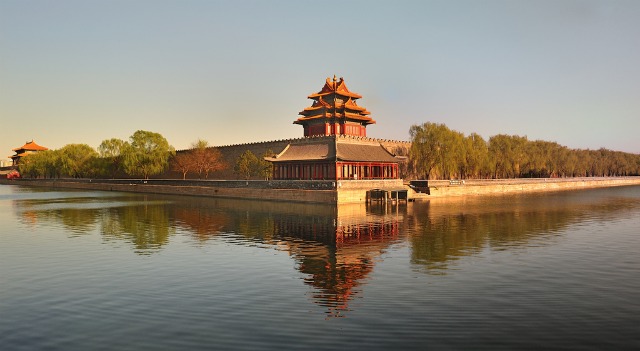
Begin at the Forbidden City, an impressive palace complex built in the early 1400’s where twenty-four emperors ruled for 500 years.  Hidden from view behind imposing walls and a deep moat lies a totally different world of marble bridges, tranquil gardens, and thousands of rooms once used to house the emperors and their households.  The Forbidden City was designed according to feng shui principles with red buildings (for luck) topped with yellow roofs (for power).  Common people were not permitted to enter, and many of the royals rarely ventured out.  Why would they have any desire to leave?  After all, of the 10,000 people who once lived here, 3,000 were concubines.

Tiananmen Square fulfilled Chairman Mao’s dream of creating the largest and most spectacular square in the world.  Designed to hold 500,000 people, it’s easy to envision the intimidating military displays regularly performed here during the days of the Cultural Revolution.  The site also evokes memories of the hundreds killed by government troops during the 1989 student protests.  But today, the most common sight is the street vendors hawking cheap Mao wristwatches, with the Chairman pounding out the seconds with his fist.  If you want one, be sure to bargain hard!

The Summer Palace is a gorgeous spot outside the city where the royals went to escape the summer heat.  While The Forbidden City was all about power and impressing visitors, this summer retreat was a pure pleasure palace.  Don’t miss the Marble Boat down by the lake.  This “boat” that looks more like a boat-shaped marble pier, was built by the crazy Empress Cixi with funds supposed to be used to modernize the Navy.


2. The Great Wall


Reputedly 5500 miles (8850 km) long, The Great Wall is considered one of the wonders of the world and is China’s number one tourist attraction.  The Chinese have a saying, “You are not a real man until you have climbed the Great Wall.”   Luckily for you, sections of The Great Wall at both Badaling and Mutianyu are easy day trips from Beijing.  Even better, both locations are equipped with cable cars, so you can save your energy for walking the Wall itself.

The Great Wall is simply awesome, a truly unbelievable engineering feat.  The 12-foot wide wall has crenellated sides like the edges of a huge castle, a height that varies between 20 to 30 feet depending on the terrain, with scenic watchtowers strategically placed all along the route.  The wall itself is impressive enough, but to build it in this unforgiving terrain seems insane.  At least one million slaves and prisoners of war worked on the project.  Many died in the process, and for centuries, the Wall was known as the longest cemetery in the world.

3. Xi’an


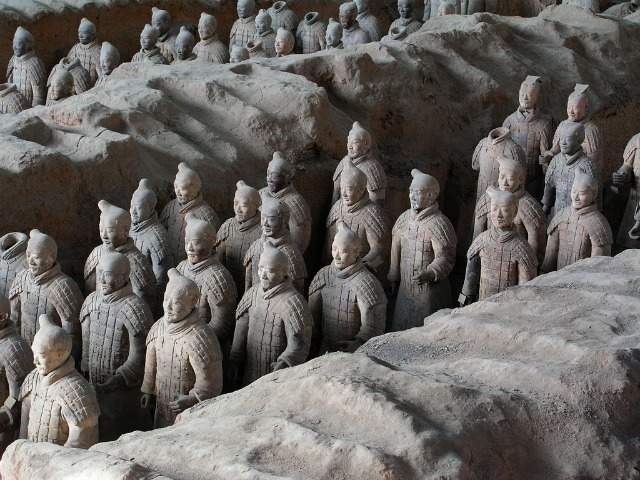
Discovered in 1974 by Chinese farmers drilling for a well, The Terracotta Warriors are one of the most significant archaeological excavations of the 20th century and the highlight of any visit to Xi’an.  Qin Shi Huang, China’s first emperor, was obsessed with the hereafter.  To ensure that he would continue the sweet life of commander-in-chief even after his death, he had his minions create a terracotta army made from local clay baked in a kiln.  This effort resulted in thousands of warlike, life-sized soldiers with weapons in hand, decked out in full battle armor, and positioned in military formation.

The Warriors are housed in 3 separate buildings (“creatively” named Pits #1, # 2, and #3).  Each pit is an unfinished archeological work in progress, with many of the soldiers and other artifacts still in the process of being discovered.  It is estimated that 6,000 soldiers will be unearthed in Pit #1 alone.  Walk around the periphery of the excavations to observe the details of each soldier and horse. Remarkably, no two soldiers are alike – you’ll see different faces, heights, and statures along with a variety of mustaches and hairstyles.  Each soldier’s head is actually a separately molded piece that fits together with the body, like inserting a peg into a hole.  The idea was to provide the soldiers with a wider range of motion so they could turn their heads during battles in the afterlife.

Xi’an offers more than just clay warriors, and even if you are not usually into song and dance, you should check out the Tang Dynasty Show.  This extravaganza features wildly colorful stage sets and elaborate costumes.  Plus a fascinating musical mix of unusual Chinese instruments and dancing that is the definition of graceful, especially when the female dancers wave their long, drooping sleeves like ribbons in the wind.


4. Food fit for an emperor


If your knowledge of Chinese food is limited to your neighborhood take-out place, you haven’t begun to appreciate this complex cuisine.  Chinese dishes are varied, healthy, always a treat for the senses, and each region glories in its own specialties.

Beijing is renowned for Peking Duck, a roasted duck dish that was a favorite in the Imperial Court. The lean and crispy duck arrives at your table intact where it is expertly sliced in front of you.  Then, you go to work creating the equivalent of a Chinese taco: spread some plum sauce on a steamed pancake and add succulent slices of duck, some scallions, and cucumber slices.  Now down it all with a cold Tsingtao beer. Hao chi! (Delicious!)

Ancient chestnut trees still grow near The Great Wall, and these wonderfully chewy nuts are the star of savory dishes like Pork with Chestnuts.  Xi’an has a longstanding dumpling tradition and eating a “dumpling dinner” ranks right up there with seeing the Terracotta Warriors as a Xi’an must-do. Wooden steamer bowls are spread out on your table, each one holding several beautifully presented dumplings.  The paper-thin wrappings conceal ingredients such as pork, chicken, ham, vegetables, fish, and even walnuts.  One of the most loved foods in China, dumplings are delicate works of art often shaped to look like animals or flowers – a delight to the eye and the tummy.   And don’t forget to sample the fragrant Chinese teas.  Some of the more elaborate teas even open up like a flower unfolding in your glass.


5. Enchanting landscapes


No trip to China is complete without a look at some of its stunning landscapes.  Waterways have always been the lifeblood of China, and one of the most enchanting is the Yangtze River, the third longest river in the world, stretching for almost 4,000 miles (6500 km) from Tibet to the East China Sea near Shanghai.

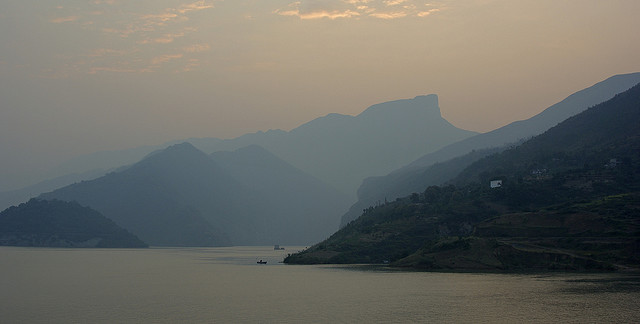
The most dramatic stretch of the Yangtze flows through the Three Gorges, one of China’s scenic marvels.  A cruise through the Three Gorges takes you into narrow passages where jagged cliffs loom overhead and past ghostly, mist-shrouded mountains.  Highlights include the Wu Gorge (the Gorge of Witches) with some of the most dramatic peaks on the river, where according to the ancients, “The peaks pierce the sky.”  And the strange Meng Liang staircase which is actually a series of holes cut into the cliff in a zigzag pattern that may have been used (with the help of some rope ladders) to scale the steep cliff.   Floating along surrounded by sheer peaks and swirling mists, you feel as if you have stepped into a Chinese painting.

A Yangtze River cruise also provides a look at the Three Gorges Dam, the world’s largest hydropower plant and China’s biggest construction project since The Great Wall.  Flood control in this region dates back to Yu the Great, an ancient king who is known for taming the waters (some say with the help of a yellow dragon).  Even without rumors of mythical beasts, controversy haunts this massive dam that displaced over a million people and whose construction continues to generate environmental concerns.

6. Shanghai


Shanghai is a city of contrasts where east meets west, and an historic waterfront faces off with a modern, neon skyline.  Shanghai is at its most romantic along The Bund, a sublime riverside walkway and people-watching paradise.  This part of Shanghai feels almost European with many buildings unchanged since the 1930’s when Shanghai and The Bund became the chief shipping, trading, and financial district for the colonial powers (Great Britain, France and the U.S.).  In those days, Shanghai was considered the Wall Street of Asia.  A walk along the 1-mile promenade reveals why The Bund has been called a “museum of international architecture” with a mix of architectural styles including a number of exceptional Art Deco structures.

The architectural delights of The Bund compete with the marvelous modern structures of the area called Pudong, directly across the Huangpu River.  While The Bund holds on to its colonial heritage, Pudong is bright and brassy, clearly demonstrating the power and financial might of the new Shanghai.  At night , the Pudong skyline is a neon fantasyland from the crystalline rooftop of the Jin Mao Tower to the Chinese Oriental Pearl Tower that looks like it swallowed two giant Christmas balls.

The people of Shanghai are as shockingly modern as the skyscrapers of Pudong. Designer clothes are de rigueur, and shopping seems to be the principal pastime.   The tranquil Yu Yuan Gardens provides a peaceful respite from the bustle of the city.  And the pearl shops nearby offer an astounding selection of these lustrous gems.  Shanghai also presents some interesting day trip opportunities including the magnificent gardens of Suzhou and the lovely West Lake in Hangzhou.

If you fly out of Shanghai be sure to travel to the airport in flashy high-speed style on the Maglev (Magnetic Levitation Train).  Capable of reaching speeds in excess of 300 mph (480 kph), the Maglev is one of the fastest trains in the world.  Watch trees and telephone poles whiz by as you cover the 25 miles (40 km) to the airport in just 8 minutes!


7. An unexpected welcome


The best reason to visit China now is because foreigners are still a novelty.   At first, you may feel uncomfortable with the way that the Chinese stare at you — like you are the most exotic animal in the zoo.  But you need to understand that many Chinese tourists are traveling from their homes in the provinces for the first time, and some have never seen a western face before.

You may find yourself surprisingly popular.  When my husband and I visited China, we were amazed when Chinese tourists at breathtaking sites like the Temple of Heaven or The Great Wall wanted to take pictures of us.  Some of your favorite memories of China may be these fun picture-taking interactions.

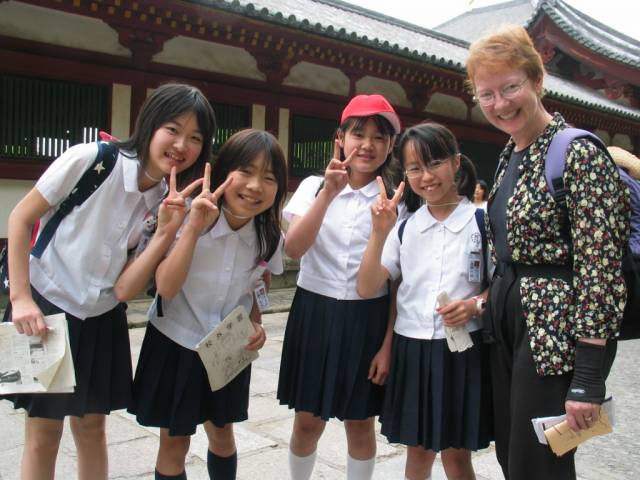
It is hard to believe that the Cultural Revolution ended just two generations ago.  Throughout China, young people seek out foreigners to show-off their fluent English, and little school children jump up and down yelling, “Hallo! Hallo!” whenever they see western tourists.  Several times, parents nudged their children in our direction – the kids proudly waving their schoolbooks to show us they were learning how to speak English.

In general, China is much friendlier than you would expect. As new generations emerge, the old antagonism towards the West seems long forgotten, and the deep suspicion of foreigners that Mao encouraged is nowhere in sight.

Thursday, February 2, 2012

Beyond the Golden Triangle: 8 Lesser Known Sights in Rajasthan, India

By Anne Supsic

Published on BootsnAll.com on February 2, 2012

Explore the world of the Rajputs and witness a way of village life that hasn’t changed much in hundreds of years.  From step wells to sexy sculptures, Anne Supsic shows you how to dig deeper into Rajasthan...

Most travelers to India concentrate on the “Golden Triangle,” a hugely popular route covering the cities of Delhi, Agra (for the Taj Mahal), and Jaipur.  All three are well worth visiting, but these megacities can be overwhelming and often leave you gasping for fresh air while yearning for a bit of peace and quiet.  To get away from the masses and experience India on a more personal scale, you need to dig a little deeper.

Rajasthan was once called Rajputana, “the land of the Rajputs.”  Out in the countryside, you can follow the history of these fiercely independent warriors who never gave up their struggle against the Mughal rulers.  In fact, many historians believe the Rajputs were responsible for keeping Hinduism alive during the 300+ years of Muslim rule.  In addition to exploring the vestiges of Rajput power, you can visit small villages and witness a way of life that hasn’t changed much in hundreds of years.

Create your own triangle anchored by Jaipur, Udaipur, and Jodhpur – and enter a time warp as you focus on the lesser known sights of Rajasthan along the way.   Here are 8 of those lesser knowns:

1. Bundi — Miniature paintings and massive step wells


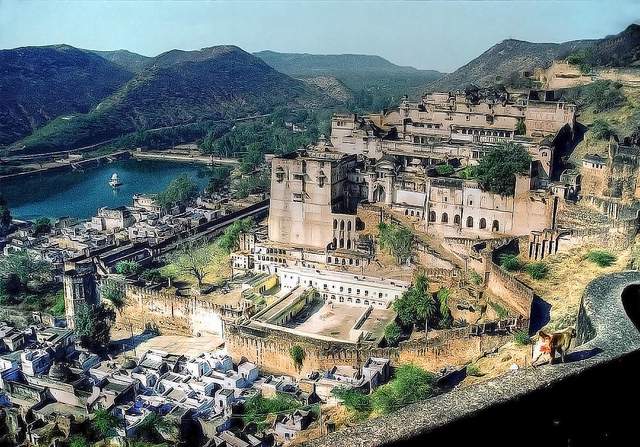
Perfectly located between Jaipur and Udaipur, Bundi is an unspoiled gem with a manmade lake and a fairytale Maharajah palace cascading down the mountainside.  This sweet small city was the capital of a major princely state during the glory days of the Rajputs, and the proud people of Bundi remained independent even under British rule, only becoming part of India after Independence in 1947.   Bundi is tourist friendly and hassle-free.  As a sign on one of the hotels in the old quarter says, this is a town where “Tourist is God.”

Bundi is famous for miniature paintings, and the enchantingly decayed Bundi Palace boasts a remarkably well-preserved collection.  The palace building is an excellent example of Rajput architecture with a magnificent Elephant Gate entranceway built in 1607.  Take a look at the open courtyard below the gate where mahouts used to get their elephants liquored up for staged elephant fights, a favorite entertainment of the Maharajah who watched from his elegant balcony above.

Inside, you can view stunning paintings still glowing with lustrous color, particularly the brilliant blues made from the gemstone lapis lazuli.  In the “Krishna room,” the playboy god appears in twelve paintings (one for each month), including the scene of a playful Krishna stealing the garments of bathing maidens and hanging their clothing out of reach in a nearby tree.   Artists still live and work in Bundi – you can even have a miniature peacock or elephant painted on your fingernail!

Bundi is called the Step Well City with more than 50 step wells, called baori, still in existence.  Step wells date back to 550 A.D. and were designed as huge water tanks that could be accessed at any water level via multiple flights of stairs.  The deep basins filled with water during the torrential rains of the monsoon season and served as reservoirs during the hot, dry summers.  But these magnificent structures were more than just wells; they were also places for prayer or meditation and a refreshing spot for cooking and bathing.

The elaborate stepwell of Rani Ji-Ki-Baori was built by a queen in 1699 with 200 steps descending 150 ft.  The superb carving makes this step well look more like a cathedral than a watering hole.  And the zigzagging steps of the step well Dabhai Ka Kund form a geometric design similar to an inverted Egyptian pyramid.


2. Baroli temples – Hidden ancient wonders


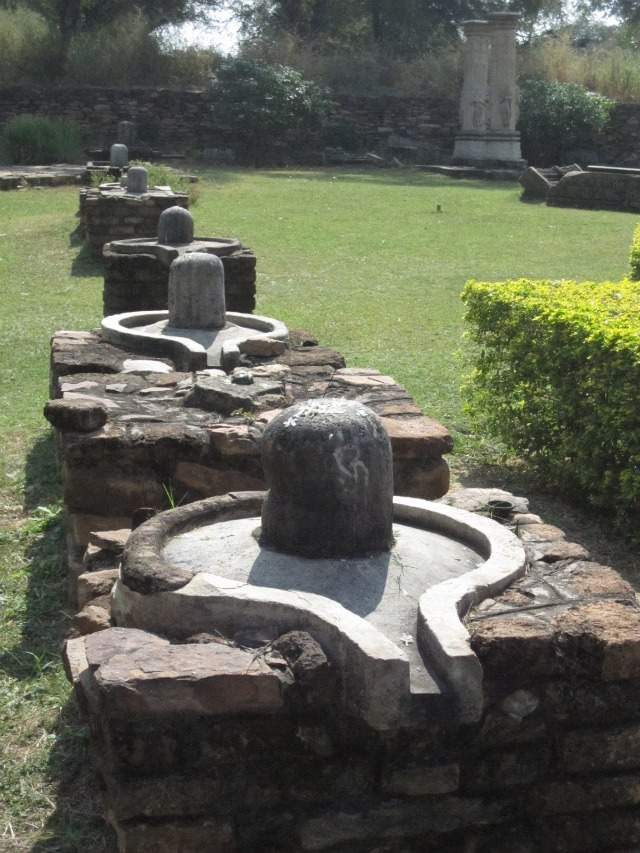
Just south of Bundi, the 9thc. Baroli Temples comprise one of the oldest and most striking temple complexes in Rajasthan.  Surprisingly few visitors come here, and as a result, these small temples devoted to Shiva retain a strong sense of the sacred.

The famous British historian Col. James Tod visited Baroli in the 1820’s and wrote of the”unrivalled taste and beauty of Baroli’s sculptures and architecture.”  The Colonel knew what he was talking about.  The temples reveal marvelous stone sculpture including a porch ceiling where every inch is covered in fantastic carvings.  A highlight of the main shrine is a bas-relief dedicated to the “big three” of the Hindu religion (easy to remember using the handy acronym GOD): Brahma the Generator (god of creation); Vishnu the Operator (preserver of the universe), and Shiva the Destroyer.  Lord Shiva is not as violent as the name may suggest; the Destroyer brings about change and is also the god of fertility.

The most obvious symbols of Shiva’s fertility power are the lingams, sculptures of the male and female sex organs that dot the temple grounds, honoring Shiva in an orgy of sexual union.  Eroticism, which is a common element of the Hindu religion, was actually a reaction to newer religions like Buddhism that advocated avoiding the temptations of the flesh to pursue spirituality.  The Hindus, who hated the idea of giving up physical pleasures, responded with erotic temple sculptures and the famous Kama Sutra – all done as a way to glorify sex as a delightful religious experience.

Before you leave, pay your respects to Shiva at the lingam altar and the priest may give you a dot of yellow turmeric paste placed between your eyebrows.   These dots or bindis represent the third eye (the gateway to higher consciousness), and the color yellow promotes inner wisdom.


3. Bhainsrorgarh – A fort on a river of glass


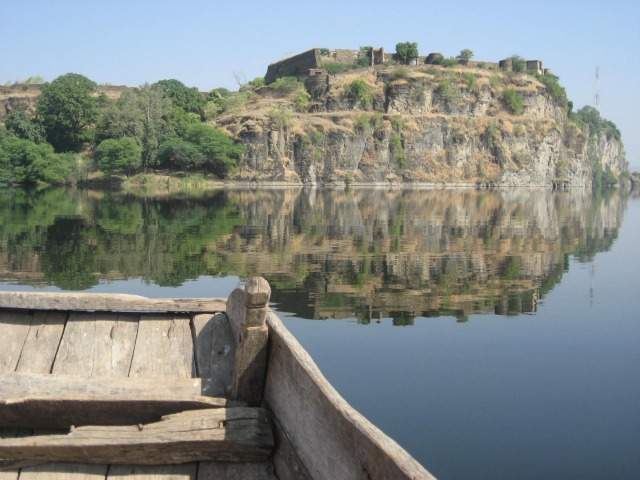
A short ride west of Baroli, Bhainsrorgarh Fort offers one of Rajasthan’s most atmospheric accommodations in an authentic fortified outpost perched at the end of a promontory standing 200 ft. above the crocodile-infested Chambal River.   Our old friend Col. Tod wrote that if he had been offered a fiefdom anywhere in Rajasthan, he would have chosen Bhainsrorgarh.

Today, Bhainsrorgarh Fort is a family home turned into a small hotel.   Throughout India, many former royal families have transformed their homes into hotels, but what makes Bhainsrorgarh special is that the family still operates the hotel themselves.  And they have purposely avoided too many alterations so that you can live the life of the rural gentry, even if it’s only for one night.

A short, steep hike leads to the river’s edge where local boatmen offer rides in rickety wooden boats.  The river is nearly 500 yards wide and 40 ft deep with a surface so placid that it is like a mirror.  The river so perfectly reflects the magnificent fort above that it feels as if you are floating into an Impressionist painting.

Be sure to walk around the small village with its rainbow-colored houses and curious residents.  Tourists are still a novelty here, and a stroll through the village will make you feel like the Pied Piper of Bhainsrorgarh as giggling village children trail along in your wake.  I bought some toothpaste at a small shop, and when I turned to leave, I saw that I had attracted a crowd of about 30 people who had gathered around to see what I was doing.

4. Kumbhalgarh – Rajasthan’s most impregnable fort


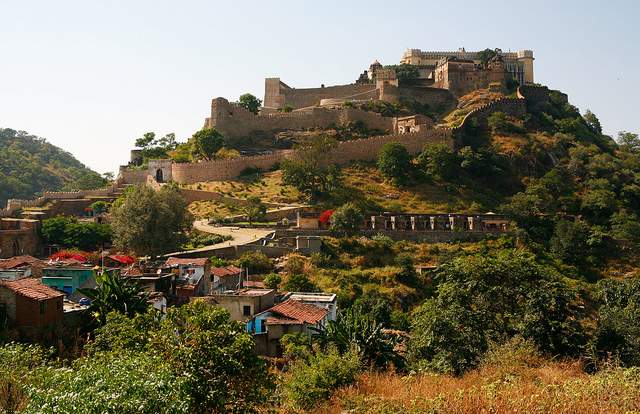
Just over 50 miles north of Udaipur, Kumbhalgarh Fort is considered the most impregnable in Rajasthan with 25 miles of walls, reputedly the second longest continuous wall in the world (after the Great Wall of China). Kumbhalgarh was a bastion of Rajput power; it was only taken once and that required a combined force of the Mughals and their allies.  The fort may also have the best location in Rajasthan: the isolated spot is surrounded by nothing other than the rounded mountains of the ancient Aravalli Hills, considered by some to be the oldest mountains in the world.

Kumbhalgarh is a huge complex with 360 temples, 700 canon bunkers, a palace, and a village where people go about their normal business in spite of living in a tourist site.  The mighty walls feature seven gates and distinctive, bulbous towers.

Great forts require great sacrifices, and when building began in 1443, King Rana Kumbha had more than the usual new construction frustrations.  According to a popular legend, any work completed on the fort during the day would crumble to ruins by sunset.  A spiritual advisor explained that the fort would never be built without a human sacrifice.  And here’s the kicker: the sacrifice had to be voluntary.  Not one of the king’s subjects volunteered to be beheaded, but eventually a pilgrim wandered by and offered himself up.  The fort was completed, and the main gate, Hanuman Pol, contains a shrine commemorating the sacrifice — right at the very spot where the pilgrim’s head fell.

5. Ranakpur Temple – Home of the Jains


The nearby Ranakpur Temple is one of the most beautiful Jain temples in all of India.  The Jains are an unusual religious group, unique to India, founded 2600 years ago.  Jainism was one of those “new” religions that frustrated the Hindus by shunning the material world.  The Jains are vigilant vegetarians renowned for their extreme respect for all forms of life.  The most devout Jain monks even gave up clothing and walked around naked except for masks over their mouths to prevent accidentally inhaling an insect.

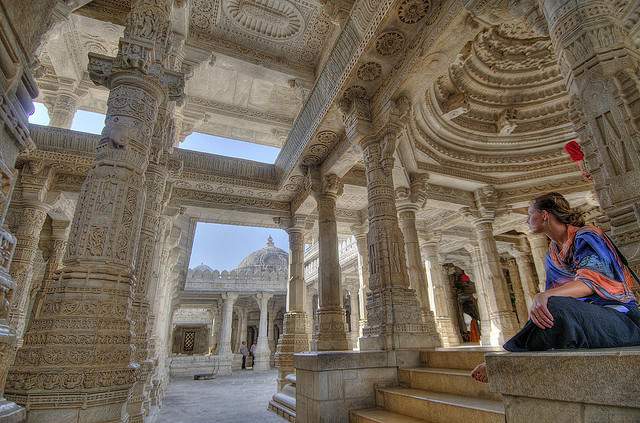
Ranakpur Temple is a white marble wonder supported by a forest of 1,444 pillars all carved with exquisite designs.  The unusual temple layout also includes five spires and a maze of 29 halls topped by 80 domes.  The temple is said to be built in the form of a celestial vehicle, and Ranakpur is, without a doubt, heavenly.  The stunning ceiling designs include an “om” symbol combined with a half moon, and a stylized figure with one head and five bodies that represents the need to control the five senses when entering the temple.  Note that in deference to the Jain disdain for harming any creatures, no leather items are permitted in the temple.

6. Narlai – A walk in the village


Situated between Udaipur and Jodhpur, the little village of Narlai is a convenient base for visiting both Kumbhalgarh and Ranakpur.  If you can afford one hotel splurge, the heritage property of Rawla Narlai should be it.  Seated at the foot of a massive 350 ft. high domed rock in the middle of a sweet country village, this luxurious 17th c. hunting lodge, once favored by the Maharajah of Jodhpur, is a little bit of Rajasthani heaven. (Mick Jagger liked the place, and if it’s good enough for Mick…)

The lovely property is decorated in an authentic style with an array of old Maharajah photographs hanging on the walls.  Modern comforts include a huge pool ideal for laps, and a lavish dinner served on the roof terrace amid flickering candles and the soothing sounds of the harmonium (similar to an accordion) accompanied by a set of tabla (Indian bongo drums).  If you are really feeling flush, you can opt for the step well dinner and dine by an 1100-year old step well, romantically lit with dozens of oil lamps.

A favorite activity is the town walk led by a hotel staff member who offers unique insight into village life.  The walk begins with a tour of a Shiva temple carved inside the rocky mountain.  A metal statue of a cobra adorns the temple altar, and during festivals, the villagers bring in the real thing.  Some brave soul milks the live cobra, and then everybody drinks some cobra milk!

The walk continues with visits inside villagers’ homes such as the home of a shoemaker hard at work finishing colorful wedding shoes for a soon-to-be-married bride and groom.  Of course, cows are venerated in India, and one small house had just three rooms with the middle room reserved for the cow!  In another house, a woman proudly showed off her nicely swept floor covered with a mixture of dirt and cow dung. (Many Indians believe that cow dung keeps a house cool and antiseptic.)

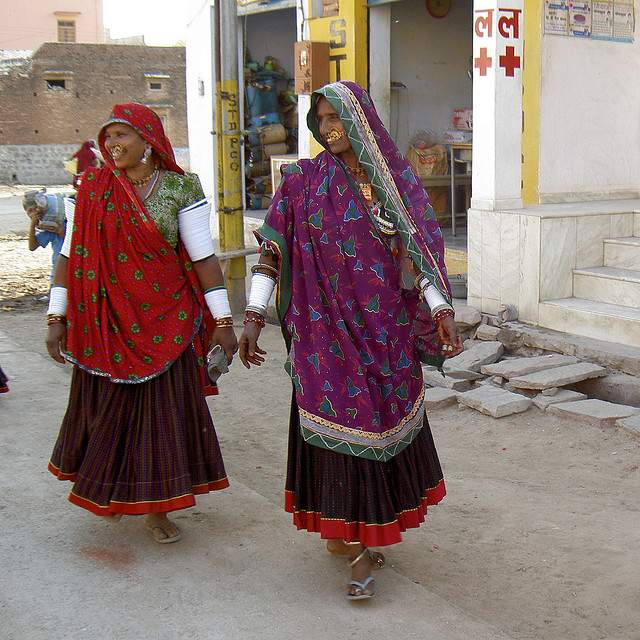
During my village walk, I even got to join a group of local Hindu women gathered on the stoop of a village home.  We had no common language but managed to communicate, mostly by admiring each other’s jewelry.  We got along well enough although I was a bit concerned about the way they kept slapping my thigh (hard) and laughing.  Made me think they had never come across a leg quite so hefty before!

7. Jojawar – Into the Aravalli Hills


The village of Jojawar, situated just two hours north of Narlai, is home to Rawla Jojawar, a heritage hotel offering a cheaper alternative to Rawla Narlai.   The hotel is a converted garrison fort with a reception desk in the former magistrate’s office and small rooms nearby that were once used as jail cells.   Speaking of reception, the welcome here is one you will be unlikely to forget: a drummer announces your arrival with an energetic drum roll, and the manager sprinkles flower petals over your head just as if you were Rajput royalty.

Two favorite activities in Jojawar are the jeep safari and the train excursion.  The open-top jeep safari offers ample opportunities to see antelopes, camels, peacocks, and lots of monkeys.  The trip may also include a visit with the Rabaris, a semi-nomadic people who stay on the move, herding their sheep and goats as they follow the rain in this arid region.

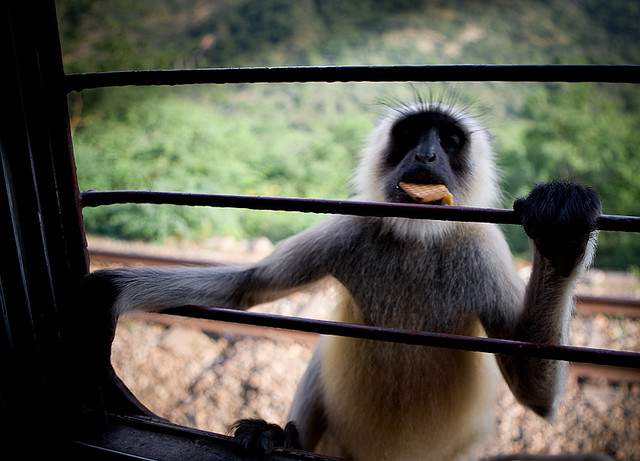
The train ride begins at Kambli Ghat station, the highest train station in the Aravalli Hills, and continues through the scenic Kambli Ghat Pass.  This is not a tourist train, and one of the best reasons to take this excursion is to share the ride with the locals.  The train passes through several tunnels (that were painstakingly carved by hand), and the children onboard laugh and scream each time the train is plunged into darkness.  The train makes several stops for brake checks, and one regularly scheduled stop to feed the langur monkeys.  These monkeys know exactly when to show up for the biscuits that all the passengers throw from the train, and the adjacent rails are crowded with hungry primates.   All the train windows have bars, and when you see how aggressive the monkeys can be, you understand why.

8. Road trip – Life in the fast lane


One more reason to dive into rural Rajasthan is to experience the crazy joys of riding the roads.  Since it is downright hazardous to drive yourself, the best way to travel is by hiring a car and private driver.  Although this would sound like an extreme extravagance in most parts of the world, in India this mode of transporting tourists is common, reasonably priced, and safe.  Not to mention fun.

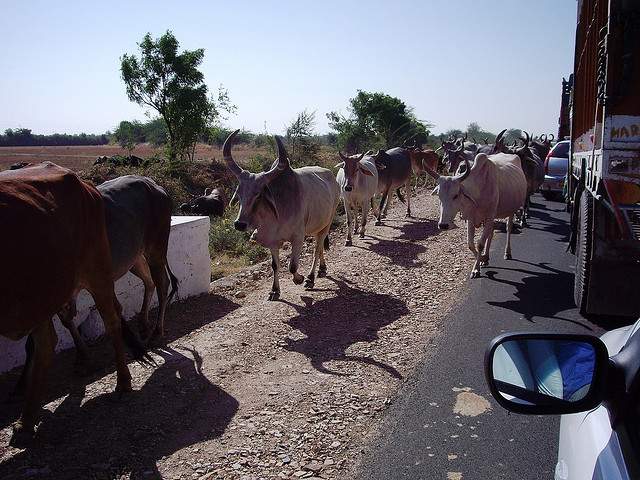
Riding the rural roads of India ranks right up there with the Taj as one of the most unforgettable of Indian experiences.  The roads are jammed with cows, goats, camels, water buffalo, and even the occasional elephant.  Not to mention people on foot, riding bicycles or motorbikes, or traveling in tuk-tuks (3-wheeled auto rickshaws).  Tuk-tuks are supposed to have a legal limit of four passengers, but they routinely carry a dozen or more, including the young macho types who ride outside, standing on the bumpers and hanging on by their fingertips.

Full-size buses and delivery trucks add to the mélange.  Custom painted with a circus car look, these colorful vehicles sport windshields decorated with tinsel, satiny curtains, and strands of garland — each truck looks like it just ran over a fully decorated Christmas tree.  And the mirrors almost always display a string of fuzzy black pompoms, good luck charms to ward off accidents and other catastrophes.

And all of this is just the activity on the road.  A typical journey passes through tiny villages and larger towns all teeming with women in sparkling saris shopping at the outdoor markets, and men getting haircuts on stools in dusty parking lots or sipping drinks at neighborhood hangouts.  You may even see the local dentist seated on the ground, well-positioned on the main drag with a nice choice of dentures spread out on a blanket.  He’ll even pull a tooth for you right there on the spot!


Photos by: Carl Welsby, TushyD, abmiller99, kian esquire, NoBigShot, lumiere, photo 2 courtesy of Frank Supsic, photo 3 by Anne Supsic and may not be used without permission.
Friday, December 23, 2011

BootsnAll Best Article Honors


Today, BootsnAll published their "Top 10 Best Articles of 2011" and my article "12 of the World's Most Fascinating Cemeteries" is at #4!

Friday, October 14, 2011

12 of the World's Most Fascinating Cemeteries

by Anne Supsic

Published on BootsnAll.com on October 13, 2011

Burial is the oldest of human rituals. From simple stone dolmens to the glory of the pyramids, humans have spent a lot of time and energy providing the deceased with a decent send-off. Basic or bombastic, cemeteries tell us how people died, but also...

Human beings have honored their dead since the dawn of time – even Neanderthals buried the fallen. In fact, burial is the oldest of human rituals. From simple stone dolmens to the glory of the pyramids, humans have spent a lot of time and energy providing the deceased with a decent send-off.

Modern cemeteries run the gamut from park-like settings with simple gravestones to elaborate cities of the dead with architecture rivaling buildings designed for the living. Basic or bombastic, cemeteries tell us how people died, but also how they lived.

Here are some of the most fascinating cemeteries on earth:


Père Lachaise — Paris


With over 70,000 burial places, Père Lachaise is Paris’s largest cemetery and one of the world’s most famous graveyards. Established in 1804, this is a true city of the dead with tree-lined avenues and clearly posted street names — a hauntingly beautiful place with expressive sculptures at every turn and lanes of ornate, side-by-side mausoleums. As you would expect, Père Lachaise is home to scores of the rich and famous including Oscar Wilde, the star-crossed lovers Abelard and Heloise, and musical talents like Chopin, Edith Piaf, and Jim Morrison. But it also houses the strangely popular grave of Victor Noir.

Victor, whose real name is Yvan Salman, was a French journalist who adopted the debonair “Victor Noir” as his pen name. Unfortunately, he was killed in a duel with Pierre Bonaparte, a great-nephew of the Emperor Napoleon. To make circumstances even more poignant, Victor is said to have died the day before he was to be married.

In death, Monsieur Noir has become something of a fertility god known for his special powers. According to one romantic legend, a woman who kisses Victor’s cold lips and slips a flower into his upturned top hat will find a husband by the end of the year. Other more down-to-earth fables involve rubbing his well-endowed (and well-worn!) nether regions for a boost in your sex life. For some reason the tips of his shoes have been rubbed shiny also. Maybe skittish visitors go the shoe route?

The lewd activity surrounding Victor even drew the attention of the Parisian authorities. In 2004, a fence was erected to protect Victor, but following a public outcry, the barrier was removed, and Victor’s charms are once again accessible to all.

>> Read more about the cemeteries of Paris


La Recoleta – Buenos Aires


La Recoleta,located in a classy Buenos Aires neighborhood, is another elegant masterpiece of architecture for the afterlife. The wide pathways (which are often patrolled by resident cats) are lined with mausoleums noteworthy for their variety of styles: cathedral, art nouveau, and modernistic boxes that one guide described as “ATM-style.” This cemetery is also known for its eclectic symbols including a menorah with a cross, lots of Masonic pyramids, and even some statues of pagan gods. Although Eva Peron is the most famous resident, the most tragic story belongs to Rufina Cambaceres who was buried alive here.

On the day of her 19th birthday, Rufina discovered that her mother was sleeping with Rufina’s boyfriend. A stunned Rufina fell into a catatonic state and was declared dead by two physicians (called to the scene by her mother). The poor girl was buried but woke up screaming and clawing at her casket. By the time a cemetery guard discovered the cracked lid on her coffin, she had died (for real) of a heart attack. Talk about “Mommie Dearest!”


Suicide and Banzai Cliffs — Saipan


The Suicide and Banzai Cliffs on Saipan are the scene of a historic tragedy that took place during WWII. In June of 1944, American forces took Saipan from the Japanese in a battle that was crucial to ending the war in the Pacific. In fact, the Enola Gay, the plane that dropped the atomic bomb on Hiroshima, flew out of the tiny island of Tinian located almost adjacent to Saipan. The appropriately named Suicide and Banzai Cliffs are covered with memorials marking the places where thousands of Japanese civilians, including parents and children, leaped to their deaths.

What triggered this mass suicide? Initially, it was thought that the Japanese civilians were afraid of being tortured or killed by the occupying American troops. However, the real reason was Emperor Hirohito’s directive that no Japanese must ever be captured by the enemy or they would no longer be considered Japanese.


God’s Acre – Bethlehem, Pennsylvania


This cemetery with the charming name dates back to the mid-1700’s when the Moravians, a Protestant denomination originating in Eastern Europe, first settled in what is now the city of Bethlehem. The most striking thing about this cemetery is the placement of the tomb stones: small flat tablets, all laid flush with the earth. A devoutly religious people, the Moravians designed their cemetery to reflect their belief that everyone is equal in life and in death. To prove the point, the cemetery contains graves of Europeans émigrés, African American slaves, and Native American Indians — including an Indian named Tshoop who may have been the inspiration for James Fenimore Cooper’s The Last of the Mohicans.

Another odd fact about this restful place concerns the practice of burying the dead with members of their “choir.” In the early days of the community, Moravians had a unique lifestyle revolving around choirs — groupings based on age, gender, and marital status such as the Single Sisters, the Married Men, and the Widows choirs. The choir was the most important structure in their lives: choirs worshiped together, lived together in separate houses, and were even buried together as you can see among the oldest graves.

Inquiring minds (you know who you are) may wonder how couples got together if married men and women lived in separate choirs. The answer is as simple as it is practical: a clever reservation-only arrangement called the conjugal room. To learn more about life in the early Moravian community visit The Moravian Museum just around the corner.


Okuno-in Cemetery – Mt. Koya, Japan


Okuno-in is located in Mount Koya, a sacred village with more than 120 Buddhist temples. The best time to visit this atmospheric cemetery is at dusk when stone lanterns line the winding paths leading the way through a stone forest of pillars and statues – many carved in the typical Buddha seated position. Follow the paths to Lantern Hall where it is said that one lantern has burned continuously for 1,000 years.

This cemetery’s most famous resident is Kobo Daishi, the founder of Shingon Buddhism, and one of the most revered religious figures in Japan. Many believe that he is just resting here waiting to be reborn, and thousands have been buried here with him, hoping to join in his rebirth.

The graveyard also contains hundreds of statues of Jizo, one of the most beloved of the Japanese deities. Jizo is represented by a sweet-faced child monk and is a protector of women and children (especially those who have died). In Japanese folklore, Jizo hides the children in his robes, to protect them from demons, and guides them to salvation. This is a touching story, but it is heart wrenching to see the Jizo statues wearing children’s clothing, such as little bibs or caps, placed there by grieving parents.

Many Buddhist monasteries offer temple lodging for tourists, and a night with the monks is a highlight of any visit to Mt. Koya.


American Cemetery — Luxembourg


Nothing is more poignant than military cemeteries on foreign soil. Outside the city of Luxembourg at the American Cemetery, a sea of white crosses honors over 5,000 U.S. soldiers who made the ultimate sacrifice here in WWII. Many of the dead lost their lives in 1944 during the Battle of the Bulge – Hitler’s last major offensive and last ditch attempt to salvage the Reich. The German army created a bulge in the Allies’ line, but they were unable to break through. 600,000 Americans fought in this battle making it the largest American engagement of the war, and nearly 80,000 Americans were killed, captured, or maimed.

The Third Army, led by General George S. Patton, played a pivotal role in crushing the German advance. Never known for his modesty, Patton described the battle this way: “It is in my opinion the outstanding achievement of the war.” The Battle of the Bulge was Patton’s finest hour, and when he died on December 21, 1945, he was buried here at the front of the cemetery, facing the other graves so that he can gaze upon his former troops forever.

>> Check out our Luxembourg travel guide


British Cemetery – Bayeux, France


Bayeux is home to the largest British WWII cemetery in France. Located near the Normandy beaches, most of those who are remembered here died during the D-Day Invasion. This cemetery feels decidedly British with colorful English flowers growing in small garden patches by each of the graves. The headstones are engraved with personal messages chosen by relatives — simple, heartfelt epitaphs like this one: “We often speak your name, but all we have to treasure is your picture in a frame.”

In Europe, memories go way back, and the British couldn’t resist a jab at the French. The colonnaded Bayeux Memorial contains a carved message referencing William the Conqueror, who invaded England in 1066. The translation of the Latin reads: “We, once conquered by William, have now set free the Conqueror’s native land.” To learn more about the Norman Conquest of 1066 take a look at the magnificent Bayeux Tapestry nearby.

>> Check out other World War II sites in England and France or read more about visiting Normandy


La Cambe German Cemetery – Bayeux, France


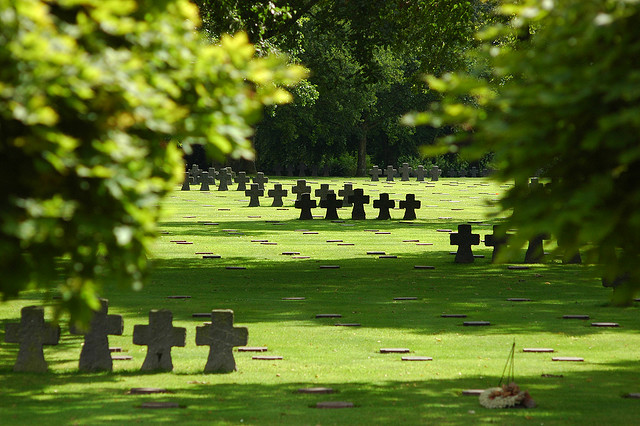
The atmosphere at La Cambe could not be more different from the British Cemetery nearby. This is a melancholy place where over 21,000 German dead are marked by scattered groupings of somber, squat gray crosses and small plaques, each one impersonally shared by two soldiers. These plaques display neither rank nor division (to maintain the anonymity of the SS). A pall of defeat still hangs heavy in the air.

In the center of the graveyard on a small hill, one large cross is flanked by two sad figures representing the parents of the dead. The sculpture adds a touch of humanity to the depressing atmosphere. And the words on a sign at the entrance remind us of who paid the price for Hitler’s ambition: “…it is a graveyard for soldiers not all of whom had chosen either the cause or the fight.”

German cemeteries were not popular in countries once occupied by the Nazis. In fact, many of these countries begrudged giving land to their former enemy, and German cemeteries were often neglected, even desecrated. Today, the care of the cemeteries is entrusted to The German Society for War Graves Care, a private organization relying solely on contributions and volunteer help. During the summer months, you can sometimes see German school children tending the graves, reminding us all the importance of learning from the past.


Don-Rak Cemetery – Kanchanaburi, Thailand


The peaceful Don-Rak Cemetery, with its low-lying stones and colorful flowers, conceals a terrible past. Almost 7,000 WWII POWs are buried in this Thai cemetery located west of Bangkok near the border with Myanmar — primarily British, Australian, Dutch and other “soldiers known only to God.” These POWs were the victims of a brutal Japanese railroad building project made famous in the 1957 movie The Bridge on the River Kwai. Actual conditions on the Death Railway were much worse than the movie portrayed — a lethal combination of a near starvation diet and an unforgiving jungle environment. Plus, the Japanese were obsessed with something they called “The Speedo Plan,” mercilessly driving the POWS to meet absurd deadlines. More than 70% died, mostly from starvation and cholera. Historians calculate that 38 POWs died for every kilometer of railway track laid.

The dead were originally buried in makeshift gravesites all along the railway line. Strangely, the Japanese displayed more respect for the dead than the living, and they permitted the POWS to conduct funerals and burials. This gave the prisoners an opportunity to bury records of their ordeal with the bodies. After the war, the remains were relocated to Don Rak Cemetery, and the buried documents, detailing horrible atrocities, were uncovered. To learn more visit the Thailand-Burma Railway Centre Museum across the street from the cemetery.


St. Louis Cemetery #1 – New Orleans


Known for its unique above-ground tombs, St. Louis #1is the oldest (1789), and possibly the creepiest cemetery in New Orleans. The dead have to be buried above ground here because of the high water table. Locals learned this the hard way when caskets buried underground had an annoying habit of popping up to the surface during a heavy rain.

This cemetery is one of the densest of burial places, housing over 100,000 bodies in just one square block. The tombs are specifically designed to handle many generations. When more space is required, the oldest corpse is simply dumped into a communal pit at the bottom of the crypt where the hot New Orleans summers are said to bring about a slow cremation.

Black magic fills the air by the grave where voodoo priestess Marie Laveau is believed to be buried. Famous for her “mojo” hands, Marie became the most powerful woman in New Orleans, selling her charms and potions to politicians worried about winning elections and to the lovesick from all over town. You can summon Marie’s assistance to make your own wish come true by knocking three times and marking her tomb with XXX. An offering also helps.

To stock up on some voodoo supplies for home use, you can visit Marie Laveau’s House of Voodoo for blessed chicken feet or maybe an all-purpose, handmade voodoo doll. Just beware – some visitors to the shop say they felt Marie’s icy fingers on their shoulders!


Arlington National Cemetery – near Washington, DC


More than 300,000 are buried in Arlington National Cemetery overlooking Washington, D.C. Famous sights include The Tomb of the Unknowns, the Eternal Flame at JFK’s grave, and the Lockerbie Memorial Cairn, a gift from the people of Scotland in remembrance of the 270 passengers and crew who died in the terrorist bombing of Pan Am Flight 103. But few visitors realize that Arlington House was once the much loved home of Robert E. Lee.

Arlington House was actually owned by Mrs. Lee, and the family lived here for 30 years until Lee resigned his commission in the Union Army and reported to Richmond to fight for the Confederacy. During the Civil War, his home was confiscated when the Lees failed to pay $92 in property taxes. At that time, taxes had to be paid in person, and for obvious reasons, Mrs. Lee was unable to make an appearance in Washington. To discourage that “Rebel Lee” from ever returning, graves of fallen Union soldiers were placed all around the house and even on the edge of Mrs. Lee’s rose garden.

The General never set foot in his home again, but his eldest son later sued the government claiming that the property had been illegally confiscated. The Supreme Court agreed, and on March 3, 1883, the U.S. Congress paid $150,000 to purchase the estate. Today, Arlington House is dedicated to the memory of Robert E. Lee – proof that old wounds can heal.


Kalavryta – Peloponnese Peninsula, Greece


One of the most heartbreaking cemeteries in the world is the one in Kalavryta where so many of the graves carry the same date of death: December 13, 1943. This is the day when the Nazis descended on the town in a murderous act of vengeance.

The Resistance had been active in the area, resulting in the death of several German soldiers. In retaliation, German troops ordered all the male residents of Kalavryta, men and boys aged 12 years and up, to gather in a field just outside the village. Once they were assembled, hidden machine guns mowed them down. Afterwards, the Nazis burned the village to the ground.

Today, Kalavryta is an attractive village of traditional homes with good skiing in the winter. The town is also famous as the final destination on the scenic Odontotos Railway. However, sadness still pervades the town. The cathedral was rebuilt after the massacre, but the clock remains eerily fixed at 2:34 – the time, as a plaque explains, “when the lament began.”