Pages

Sunday, September 18, 2011

Repositioning cruise: bargain of the sea

BY ANNE E. SUPSIC
SPECIAL TO THE MIAMI HERALD

Published in The Miami Herald on September 18, 2011


For years, I had dreamed of crossing the Atlantic in a mighty ocean liner. For me, a transatlantic voyage conjures up visions of women in ballroom gowns gliding across gleaming hardwood promenades on the arms of men in top hats.

Today’s cruises may be more about spa treatments and the rock-climbing wall, but the romantic notion of a journey across the sea persists.

A repositioning cruise can make that dream come true at a bargain price. Twice a year, in spring and fall, cruise ships of the world undertake a great migration, following the sun like snowbirds flying south for the winter. The most popular repositioning cruises take place between Europe and America on ships that ply the Mediterranean in the summer and ferry passengers around the Caribbean during the winter. Anxious to fill cabins on these necessary crossings, cruise lines offer some of their best deals.

To fulfill my fantasy, my husband and I chose a 14-day Celebrity Century cruise last year from Barcelona to Miami for the fire sale price of only $65 a day per person (including port charges and fees). Not bad for an all-inclusive package covering accommodations, food, entertainment, transportation, and some unusual ports of call.

Long considered a drawback of the repositioning cruise, one-way flights are not nearly as elusive or expensive as they once were. Bargain hunters to the core, we flew Virgin Air to London followed by a low-cost Easy Jet flight to Barcelona for less than $400 a person. We also added a few days in London to stroll along the Thames, down warm beer in the pubs, and catch a show in the West End.

Repositioning cruises start or finish in some of Europe’s most intriguing cities including Venice, Athens and Lisbon. Barcelona was high on our travel to-do list, so we spent a leisurely pre-cruise week in this multifaceted city where splendid modernisme architecture, narrow medieval streets, and laidback beaches are all within walking distance.

Of course, I did wonder if the romance might wear off as I spent day after day at sea with no port stops to break the monotony. My typical travel style is more of a high energy, cultural immersion experience, and I told friends this would be a first: a vacation where I’d be forced to relax! But I was secretly looking forward to a peaceful change of pace.

Our cruise got off to an uncertain start. Our ship was just coming out of dry dock after repairs for rudder problems that had interrupted the cruise before ours. We were not the only passengers to wonder whether the ship was seaworthy enough for a trip across the Atlantic.

The lights of Barcelona slipped away as we glided out into the Med, and once we were underway, my worries evaporated like the water droplets on my cabin porthole. I learned that engineers from Lloyds of London had come aboard to verify the safety of their investment. If Lloyds was satisfied, so was I.

Ports of call

Our first port was the Spanish mainland city of Malaga. I had fairly low expectations, but I was thoroughly charmed by this Moorish city with the Med on its doorstep and craggy mountains in its backyard. The Moors occupied the city for 700 years and left behind an 11th century Alcazaba — a fortification — graced with keyhole arches and tranquil Alhambra-like reflecting pools.

Our ship passed through the Strait of Gibraltar where, at its narrowest point, Europe and Africa are separated by a mere eight miles. Like a massive black ghost ship, “The Rock” loomed alongside us as we entered the Atlantic Ocean and navigated towards islands off the African coast.

Our first island stop was Portuguese Madeira where I had arranged a private tour with Daniel’s Taxi, and Daniel himself showed us the sights. Madeira is called the flower island and it’s easy to see why. Hibiscus, hydrangea, belladonna, and bougainvillea bloom everywhere, and huge poinsettia trees grow wild along the roadside.

For lunch, Daniel recommended a local specialty: a fish called espada. “What makes the espada unique,“ Daniel explained, “is that this fish comes from 3,000 feet below the sea and is only caught in two places in the world: here in Madeira and off the coast of Japan.” Our espada, grilled with bananas and followed by a glass of sweet local wine, made a perfect Madeira lunch.

Our last port stops were on two of Spain’s seven Canary Islands: Tenerife and La Palma. Both islands offered quaint architecture and plenty of natural beauty. On La Palma, a little isle dotted with pastel houses, we hiked the rim of the San Antonio volcano, then rewarded ourselves with a glass of sweet Malmsey wine.

The open sea

Sailing across the Atlantic takes time — seven days, to be exact. My husband dreaded this part of the trip thinking that he would be terribly bored. No danger of that. Our ship provided a nonstop schedule of activities including enrichment courses on art history and the evolution of western music. Plus mental tune-ups at psychology lectures, cooking classes, and dance lessons. It was like taking half a dozen adult education courses in one week!

A behind-the-scenes tour of the galleys revealed how seafaring chefs prepare more than 9,000 meals a day. Quite a feat involving more than 1,700 dozen eggs, 1,400 pounds of chicken, and 45,000 pounds of fresh fruit. Imagine the logistics of managing that grocery shopping list!

“All the imperishable items as well as fish and meat (purchased from the U.S. to meet U.S. standards) were loaded onto the ship in Barcelona,” explained Executive Chef Claudio de Carlo. “Then we topped up with fresh fruit in Tenerife.” With so many tempting food choices, our biggest cruise challenge was avoiding major weight gain.

Sea days were also a chance for some pure relaxation. Life seems simpler surrounded by nothing but blue sea. To work off those extra calories, we braved the wind-whipped walking track and did our duty in the fitness center. Another favorite pastime was watching for flying fish. We were mesmerized by these little guys who shot up out of the water like miniature silver torpedoes and zoomed across the waves flapping their tiny “wings.”

Unfortunately, the glamour of yesteryear was in short supply, especially during the day, when guests adopted an “anything goes” attitude toward apparel, and the sun worshippers around the swimming pool tended toward overexposure. But the crew always looked sharp in their uniforms, and on the three formal nights, I was thrilled to see some couples dressed in gowns and tuxedoes floating down the carpeted stairs into the dining room.

Overall, our sailing was surprisingly smooth, although we did catch the tail end of Hurricane Tomas, who brought with him 10- to 12-foot waves. We never got seasick, but for two days, we lurched around the ship and felt as if we were sleeping on a roller coaster.

We bid farewell to The Century in Miami. It took us several days to get our land legs back. At unexpected moments, my knees would start to wobble, and I would feel as if the earth was moving under my feet. But soaking up the sun and admiring the Art Deco buildings of South Beach was a perfect antidote. Then with a short (and cheap) flight out of Miami, we were home in Pennsylvania again.

Repositioning was a delightful way to end our European vacation. And did I mention no jet lag? Rather than crossing a half dozen time zones in one night, we made the change gradually, one hour at a time. By cruising west, we gained an hour of sleep almost every other night. My idea of heaven!

Repositioning cruises

Most major cruise lines offer repositioning voyages, the bulk of them in October-November and April-May. A good source for schedules and ship choices is www.cruisetransatlantic.com. Also check with individual cruise lines or a travel agent.

Saturday, September 17, 2011

Word of Mouth

Published in Fodor's Beijing guidebook in 2011

"The Laoshe teahouse was fun with elaborate teas -- my tea looked
like a flower unfolding in my glass.  And they had a band playing live music on unusual old instruments."                                                              
-- Magster2005

Thursday, August 4, 2011

Travel Presentations

I have developed and presented the following programs:


"How to Become a Travel Writer"

This program covers everything you need to know to become a travel writer including the different types of travel articles, where to find story ideas, and how to mix writing with your traveling.  I also provide details on: researching and developing story ideas during your trip, formatting travel articles, and how to write effective queries to publishers.

Presentation Venue(s):

Black Diamond Writer's Network (August 2010)

"Around the World in 259 Days"

When we retired in 2005, we sold our house, our cars, and most of our personal belongings to travel around the world.  Discover how we planned this trip (all on our own), what we saw, and how it changed us.  Travel with us from the South Seas paradise of the Cook Islands, across New Zealand, and into the Australian Outback.  Learn about WWII history on Saipan, culture shock in Japan, and the joy of freewheeling travel as we traipse all over Europe -- staring awestruck at the Parthenon, hiking Italy’s Cinque Terre, and ending up in a Munich beer hall.

This program has broad appeal offering an entertaining mix of adventure, education, and humor along with amazing photography.

Presentation Venue(s):

Shawnee Ridge Retirement Community (June 2011)

Grace Park Retirement Community (July 2011)

Jewish Resource Center (August 2011)

Moravian Village Retirement Community (August 2011)


"How to Travel Anywhere in the World on Your Own"

It's easier than ever to travel almost anywhere in the world on your own.  Discover the benefits of independent travel and learn how to plan your trip of a lifetime.  Topics include:

·    Deciding where to go and what to see

·    A step-by-step process to plan the perfect trip

·    Favorite travel websites

·   Tips on topics such as how to meet the locals, what to pack, and the joys of public transportation

Presentation Venue(s):

Moravian College (October 2011)


"Broaden your Studies Abroad: Conquer Culture Shock and Explore the World on your Own"

Learn what to expect in a foreign country and how to make the most of your studies abroad opportunity.

·    How to prepare for culture shock

·    Tips on dealing with differences

·   Ideas on how to take your year abroad to the next level with independent travel

Presentation Venue(s):

Moravian College (October 2012

Wednesday, July 27, 2011

7 Prehistoric Sights You've Probably Never Heard Of

Published on BootsnAll.com on July 14, 2011

7 Prehistoric Sights You've Probably Never Heard Of
by Anne Supsic
July 14th, 2011

Long before the age of recorded history, man was hard at work building monuments, devising tools, and scratching out a living in a world where simple survival was the greatest challenge.  Thousands of years later, archaeologists continue to discover relics from this time — buildings, artifacts, and even human remains – that help us to envision what life was like for early humans.

Stonehenge will probably always be the #1 prehistoric site on everybody’s bucket list.  But the world is full of other underrated prehistoric attractions each with its own aura of mystery.  Some of these lesser knowns are overshadowed by grander (or better publicized) sights nearby.  Others are located off the typical tourist track requiring a little more effort to unearth. But all of them fill us with awe and help us feel connected to a very distant past.  Here are some of those unsung wonders:

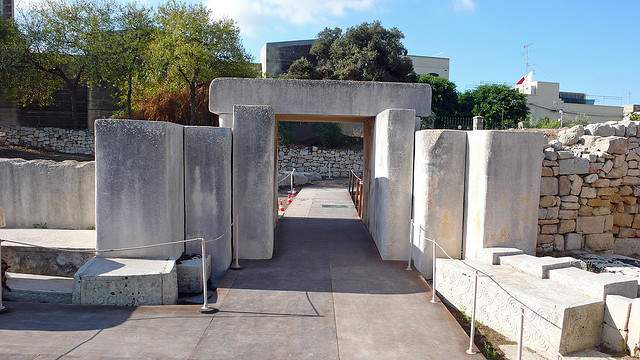
Tarxien Temples and the Hypogeum – Malta


Believe it or not, the megalithic temples on the Mediterranean island of Malta are the oldest surviving free-standing structures in the world.  And the Tarxien Temples, dating from 3000- 2500 B.C., offer an excellent look at stately standing stones and portals that shelter inner chambers where priests performed sacred rites.


Intricate stonework is a highlight here.  A stone altar decorated with carvings of animals may have been used for animal sacrifice, and the lower portion of one of the statues affectionately known as the “fat ladies” presides over the ruins from her pedestal perch — a chubby fertility goddess wearing a demure pleated skirt.

Malta’s most acclaimed prehistoric site is just a 10- minute walk from the Tarxien Temples: a strange underground burial site, believed to hold 7,000 bodies, called the Hypogeum.  Entrance to the site is strictly regulated with only 60 people permitted to enter each day, and it is a real privilege to climb down into the elaborate subterranean chambers.  Working with primitive tools and little light, the ancient builders faithfully replicated the above-ground temples (like Tarxien) carving pillars and portals out of the solid rock.

The Mystery: No one knows much about these temple builders except that they were obviously part of a very sophisticated culture.  More importantly, no one understands why they abruptly stopped building their impressive temples and seemed to suddenly disappear.

The Tarxien Temples and the Hypogeum are an easy bus ride from Malta’s capital city of Valletta.  For a better understanding of the monuments (and for a look at lots of “fat lady” statues) visit the National Museum of Archaeology in Valletta.

Mycenae – Greece


This ancient Greek citadel, a former powerhouse of the Peloponnese, is located on a rocky hilltop affording views out over the plains.  Inhabited since 4,000 B.C., Mycenae immediately impresses with its massive stone walls and an elegant entranceway called the Lion Gate, considered one of Europe’s first monumental sculptures.


This is also a place steeped in myths and legends.  It was here that Agamemnon was murdered in his bathtub by his wife and her lover.  In fact, Mycenae only existed in the poems of Homer until 1874 when Heinrich Schliemann, a German amateur archaeologist who took Homer seriously, began excavating.

Today the site includes the fortified acropolis and the surrounding tombs.  Don’t miss the beehive-shaped Treasure of Atreus (aka the Tomb of Agamemnon) and bring a flashlight for a climb into the secret cistern that provided Mycenae with fresh water during lengthy sieges.

The Mystery: The stones used to build these fortifications are so large the Greeks described them as “cyclopean,” believing that only the mythological Cyclops could have maneuvered such huge stones.

Mycenae is located about 12 miles north of Nafplion.  Another worthwhile prehistoric site in the area is the fortress at Tiryns, also built with cyclopean walls.

  
Otzi the iceman – Italy


Eerily well-preserved, Otzi the iceman is on display at the South Tyrol Museum of Archaeology in Bolzano, Italy.  A small window provides a look inside the special room where high-tech temperature control prevents Otzi from deteriorating.  The iceman was discovered in 1991 by two German tourists hiking in the Otzal Alps.  In that desolate location, snow and ice had protected him for 5300 years, leaving his skin and even his internal organs intact.

Just as fascinating as the iceman himself are his clothes and his extensive toolkit.  Otzi’s most valuable possession was a copper axe that suggests he may have been a warrior or a tribal leader.  Check out Otzi’s fashionable look: his hat, cape, leggings, shoes, and even his comfy goatskin underwear!  Finally, stand in front of the museum’s lifelike reconstruction of the iceman and get a good glimpse of a very real prehistoric man.

The Mystery: Initially, scientists believed Otzi died of natural causes or possibly froze to death.  However, x-rays have revealed the iceman was shot in the back with an arrow.  Clearly, Otizi’s death was a homicide. Like a prehistoric cold case file, theories about Otzi’s demise abound.  Was he the victim of attempted robbery (maybe somebody wanted that copper axe)?  Or did Otzi fall out of favor in a coup d’état – an ousted leader on the run who was tracked down and shot in the back?

Note that the entire South Tirol Museum of Archaeology is well worth a look (if you can tear yourself away from Otzi!).

Newgrange – Ireland


Newgrange sits on a ridge north of Dublin, Ireland near the Boyne River, an ancient monument 1,000 years older than Stonehenge.  When the Celts discovered Newgrange, they called it a “fairy mound,” and the site is literally a grassy mound that covers about an acre with a front wall of sparkling white quartz.


Access to the interior was originally blocked by an entrance stone, a stunning piece of megalithic art displayed at the front of the site.  The stone is carved with swirling spires that might represent the sun and the stars, offer a welcome, or perhaps contain a warning.  Enter along a 60-ft. passageway leading to an impressive corbelled vault.  This ancient vaulted ceiling has remained intact and waterproof for 5,000 years despite the fact that it was built without mortar — just stacked stone.  Newgrange has been described as a passage tomb, but it is more than just a burial place. It is believed to have been a house of worship, much like a prehistoric cathedral.

The Mystery: At dawn during the winter solstice, sunlight streams through an opening above the entrance, travels with remarkable accuracy along the passageway, and illuminates the entire chamber for about 17 minutes.  No one knows what significance this event held for the ancients.  The light may have symbolized life after death or maybe this was just a way to kick off the new year celebrations.

Two other prehistoric mound tombs can be visited near Newgrange: Knowth and Dowth

Cromeleque dos Almendres – Portugal


This sacred Portuguese sight is located in a secluded spot near the town of Evora in Central Portugal. Cromeleque dos Almendres is often called the “Portuguese Stonehenge,” but that is a classic case of overreaching.  The ancient stones are rather simple; the charm here is in the off-the-beaten-track location and the chance that you might have the place to yourself.


Arrival is via a dirt road, traveling past gnarly cork trees with convoluted branches that look like something out of the Forest of No Return.  One of the oldest stone circles in Europe, Cromeleque dos Almendres encompasses over 90 menhirs (standing stones).  The stones are positioned in a double circle, and several are carved with unusual drawings.

The Mystery: One stone stands out because its flat top is full of holes.  This dimpled stone may have been a tool used for astronomical observations, an altar for fertility rites, or some kind of game board (maybe an early version of Chinese checkers?).

The Evora area contains dozens of prehistoric sites including the Great Dolmen of Zambujeiro

Grauballe man – Denmark


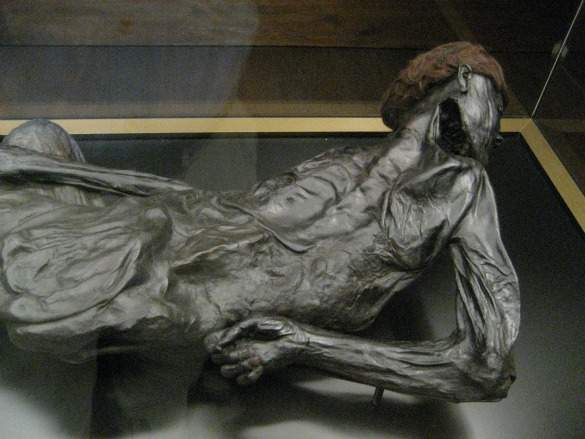
Denmark’s Grauballe man is the star of the Moesgard Museum near Arhus.  He was discovered in 1952 by some local peat cutters, and at first, townspeople thought he was just a drunk who had fallen into the quicksand-like bog.  It turned out that he was the best-preserved Iron Age bog man ever discovered in Europe.

The special chemical composition of the bog water acted as a preservative keeping this 2,000 year-old man in exceptionally good shape.  Although his skin looks quite leathery in his dimly lit display case, his hands and feet are particularly intact – so well-defined that you could take his fingerprints. And he still has his hair!

When he died, the Grauballe man was about 30 years old, 5’ 7” tall, and in perfect health except for his teeth that show signs of periodontal disease (guess he forgot to floss).  Oh, and the fact that his throat was cut from ear to ear!

The Mystery: Bogs were often used to make sacrifices to the gods.  Considering the gruesome way he died and the fact that he was buried naked, the Grauballe man may have been a human sacrifice.

The Moesgard Museum is an easy bus ride from downtown Aarhus, Denmark’s second largest city. Museum admission also includes access to the Prehistoric Trail with reconstructed Viking homes.

Les Fontaines Sallees – France


Near Vezelay in the Burgundy region of France, the salt water springs of les Fontaines Sallees still lure visitors as they have since prehistoric times.  Back then, people were drawn here for the salt — a precious commodity that not only preserved food, but also inspired religious ceremonies, and was renowned for its medicinal properties, curing illnesses such as rheumatism and skin diseases.

The salt fountains are situated in a pleasant clearing accessed by a poorly-marked path.  Low-lying walls clearly delineate the circular temple of the Gauls, the holy place where Druid priests and priestesses once worshipped their water gods. T he spring was covered up hundreds of years ago to keep out salt smugglers and was only revealed in 1934 by a scholar chasing medieval legends.  The words of a troubadour ballad led him to this place — another case of legends leading to discoveries.

The Mystery: Over 4500 years ago, ancient people hollowed out oak trees forming wooden well casings to capture the prized, salty liquid.  Remarkably, their unique wells still remain, safeguarded by the minerals in the water. Inside these little wooden tubs, the sacred water hisses and bubbles as gases like nitrogen and helium rise to the surface.  Who knows what healing powers these waters may still hold?

For a look at prehistoric cave paintings visit Grottes d’Arcy-sur-Cure about 20 minutes north of Les Fontaines Sallees.

Photos provided by Frank Supsic and may not be used without permission except #1 - Michel27, by , #2 – by Templar1307, #3 – by Kennis © South Tyrol Museum of Archaeology, Augustin Ochsenreiter, #4 – by flicks-of-micks and #5 by PhillipC

Monday, April 18, 2011

Music to Our Ears

Published in Arthur Frommer's Budget Travel magazine Febuary 2011

When renting a car or an apartment equipped with a CD player, keep an eye out for CDs of local traditional tunes, like fado in Portugal or bouzouki music in Greece. We enjoy the homegrown ambience while we're traveling and take home the disks as souvenirs.  Anne Supsic, Saylorsburg, PA

Friday, February 18, 2011

10 Reasons to Take a Repositioning Cruise

Published on BootsnAll.com on February 16, 2011

10 Reasons to Take a Repositioning Cruise

by Anne Supsic
February 16, 2011

For years, I had dreamed of crossing the Atlantic in a mighty ocean liner like the Titanic (well, not exactly like the Titanic). In spite of that infamous sinking, a transatlantic voyage conjures up visions of women in ball gowns gliding across gleaming hardwood promenades on the arms of men in top hats. Today’s cruises may be more about spa services and scaling the rock climbing wall, but the romantic notion of a journey across the sea still persists.

A repositioning cruise can make that fantasy come true. Twice a year, in spring and fall, the cruise ships of the world undertake a great migration, following the sun like snowbirds flying south for the winter. The most popular repositioning cruises take place between Europe and America on ships that ply the Mediterranean in the summer and then ferry passengers around the Caribbean during the cold winter months.

Major cruise lines such as Celebrity, Holland America, and Princess offer a variety of these transatlantic voyages every year. Cruise length is typically 13-17 days, and the most popular months for repositioning are April, May, October, and November. For a complete listing of available cruises see www.cruisetransatlantic.com.

Here are 10 reasons why you should take a repositioning cruise now:

#1: Cruise value


Repositioning cruises offer some of the best bargains in the cruise industry. With cruise liners anxious to fill cabins for these necessary crossings, prices can be remarkably low. A transatlantic cruise can cost as little as $65/day/person (including port charges and fees). Not bad for an all-inclusive deal providing accommodations, food, entertainment, transportation, and some unusual ports of call!

#2: Cheap one-way flights


One-way flights were long considered a major downside of the repositioning cruise. However, one-way flights are not nearly as elusive (or expensive) as they once were. When you shop around for one-way flights don’t forget to consider Europe’s discount airlines. One inexpensive alternative is to pair a cheap one-way flight to London with a short hop on a European budget airline to your embarkation city. Also consider Iceland Express, a low-fare airline offering great one-way deals to Europe out of Newark, N.J.

#3: World class cities


Repositioning cruises begin or end in some of Europe’s finest cities creating the perfect complement to a European adventure. The two most popular routes connect either Rome or Barcelona with Florida, but the repositioning circuit also includes European wonders like Athens, Lisbon, and Venice. Wherever your itinerary takes you, make some time before or after your cruise to ogle modernisme architecture in Barcelona, experience Portuguese soul music in a Lisbon fado house, glide along on Venetian canal, or get lost in the antiquity of Athens or Rome.

#4: Exotic ports


Your repositioning cruise across the Atlantic will most likely stop at one or more of the exotic islands off the coast of Africa. Possibilities include Madeira Island, a floral wonder with unusual hiking trails called levadas; the Azores known for whale-watching and pineapple plantations; or one of Spain’s seven Canary Islands where the weather seems stuck in an eternal spring and dormant volcanoes add to the natural beauty. Other common ports include Malaga and Cadiz on Spain’s southern coast and Moroccan cities like Tangier and Casablanca.

#5: Relax at sea


Traveling across the ocean takes time, so plan on six or seven days at sea. Don’t worry about being bored – these ships offer more than enough activities to keep you busy. However, this is an ideal opportunity to unwind far away from any distractions. Life seems simpler surrounded by nothing but blue sea. For maximum pampering get a pedicure or a hot stone massage in the onboard spa. Walk the open decks, watch for flying fish, or grab a deck chair and curl up with a bestseller. You may even want to try that time-honored ship sport: shuffleboard!

#6: Enrichment


Most cruise lines offer extensive enrichment programs allowing you to expand your mind (while you struggle not to expand your waistline with all the tempting food choices on board). Learn about the glories of Florence in an art history class, get a mental tune-up in a psychology lecture, or trace the evolution of western music from Bach to Berlioz. Sound too serious for you? Then check out the cooking classes or get your samba on with some dance lessons. It’s like taking half a dozen adult education classes all in one week!

#7: Entertainment


Cruise ships offer all kinds of entertainment ranging from Bingo and trivia games to comedians and Broadway productions. Music lovers can choose between elegant Classical string quartets and raucous dance bands. If you’re feeling lucky, you can drop a few in the casino. Shopaholics can browse the shipboard bargains on art, jewelry, and booze. Or if you are exhausted from so many activities, you can watch a movie in the privacy of your own cabin.

#8: Florida sun


Florida is a frequent bookend of a repositioning cruise giving you the opportunity to soak up some sunshine in ports like Miami or Fort Lauderdale. Take a dip in the ocean, check out the Art Deco architecture of South Beach, or search for gators during an airboat ride in the Everglades. All are perfect ways to get into vacation mode at the start of your trip or enjoy one last fling before heading home.

#9: Back-to-back option


If you have the time, consider doing a back-to-back. In cruise lingo, a back-to-back is simply two cruises in a row. For example, you can sail across the Atlantic to Europe and then continue on that same ship for a Mediterranean cruise. Or top off your transatlantic voyage back home with an additional cruise island-hopping in the Caribbean. An added benefit is the price break you get on the combined cruises. Of course, you’ll need extensive time to be able to do so.

#10: No jet lag


One of the greatest benefits of cruising between continents is: no jet lag! Rather than crossing half a dozen time zones in one night, you make the change gradually, one hour at a time. By cruising east to west, you gain an hour of sleep almost every other night. If that isn’t heaven, what is?

[Or not]


Of course, there are some downsides to a TransAtlantic cruise. While the per-day value is very good, overall, a two week cruise is simply going to cost more than one that lasts four to seven days. That means you need more vacation days, and since fewer of those days are actually spent exploring a new destination, it’s not as appealing of an option for more independent-minded travelers. And finally, the higher cost and longer trip length means that the majority group on the cruise will be older travelers and retirees. If that’s a deal-breaker — or the thought of 8 days on open water crossing the Atlantic makes you queasy — a TransAtlantic cruise may not be the best choice for you.

Thursday, September 30, 2010

How to Hire a Private Guide

Published on BootsnAll.com on September 29, 2010

How to Hire a Private Guide

By Anne Supsic
September 29th, 2010

Independent travelers and escorted tours go together about as well as arachnophobes and crawly things. In fact, most independent travelers who see a tour group trailing behind a guide holding aloft a closed yellow umbrella feel a bit smug. And yet, do you ever wonder if you might be missing out on information that tour guide is sharing? For the best of both worlds hire a private guide!

I am not talking about a small group tour, but a true one-on-one travel experience designed specifically for you. On this type of tour, the “tour group” is just you. I have successfully hired private guides all over the globe in Peru, Cambodia, Thailand, China, and Russia. And I can tell you that the private guide business is booming. From university-educated, certified guides to former taxi cab drivers turned energetic entrepreneurs, you have plenty of choices.

 Why hire a private guide?


Private guides enhance the travel experience of even the most fiercely independent backpacker. Here are the best reasons to hire a private guide:

Customized itineraries: You build your own itinerary based on your interests and according to your time schedule. And a private guide can take you to places that are difficult or impossible to reach on your own. Plus, your private guide will take you where you want to go and nowhere else. No annoying shopping stops at the local leather goods outlet or “cultural experiences” at souvenir places masquerading as art galleries.

In-depth knowledge: In my experience, private guides know their stuff and impart a commendable love of their country and its history. They also tend to be professional and patient — which is a good thing because having a guide all to yourself means that you can ask endless questions.

Inside track: With a local as your guide, you benefit from insider knowledge that can get you off the tourist treadmill. Avoid the crowds and walk right into places that are infamous for long waiting lines. Or eat lunch in a restaurant that seldom sees a Westerner’s face.

Sightseeing and transport: You can combine transportation to your next destination with a day of sightseeing. This efficient option offers real travel value and also eliminates a ride on that rickety local bus! Include some hill tribe visits on your road trip across Northern Thailand or stop at Inca ruins and handicraft markets as you make your way from Cuzco into the Sacred Valley.

A day with no worries: For the independent traveler, letting someone else manage the details can be as restful as a day at the spa. What a relief to put aside the guidebooks and the maps and let someone else do the heavy lifting.

A chance to spend time with a local: My favorite reason for hiring a private guide is for the pleasure of their company. This is a priceless opportunity to spend time with a local who speaks your language. Most guides are more than happy to share the details of their lives with you. Your guide may tell you their whole life story offering you the chance to learn about a life experience totally different from your own.

Where to find private guides


Guidebooks occasionally recommend private guides. And of course, guides can be hired through hotels or travel agencies. But the best way to find a guide is by word of mouth, and the best sources are online travel forums. Websites like Trip Advisor and the BootsnAll Boards provide the real skinny from fellow travelers whose private guide recommendations are based on personal experiences. Travel forums have become quite powerful, and a guide’s livelihood depends on good recommendations.

How to choose the right private guide for you


Background and abilities: Finding a capable guide is not as hard as you may think. The top requirement for a guide is the ability to speak English well, and this is something you can easily confirm from other travelers’ experiences.

Transportation: A good car is a must, and in hot climates, air conditioning is a blessing. Rely on your fellow travelers for verification.

Guides and drivers: You may have a choice of hiring either a guide who drives or a 2-person team including a guide and a driver. Obviously, hiring a driver and a guide is more expensive, but if the drive is a pot-holed cliff-hanger, a separate driver may be the safer way to go.

Chemistry: For me, chemistry is the most critical factor. Unfortunately, it is also the most elusive. The best way to find a good match is by closely evaluating other traveler’s recommendations and through your own communications with potential guides. It is surprising how much you can learn about a person in an email.

The hiring process

The hiring process can be easily conducted via email. Use this emailing time to hash out the details of your itinerary and get to know each other. I usually contact at least two guides for a comparison. The best guides are very popular so start the process as soon as you make your travel plans.

Agreeing on the itinerary


Your initial email should include a detailed description of where you want to go, and what you want to see. The clearer you are on what you want, the better your tour will be. Be sure to mention how you heard of the guide (i.e. on which website or other source).

Don’t be concerned if your guide responds in less than perfect English; guides often speak English better than they can write it. Finalizing your plans may require numerous emails, but that’s good because this is how you develop a relationship.

Be sure to keep emailing until you have complete agreement on: itinerary, cost, start time, and pickup location.

Costs

Your guide will provide a cost for the day, but don’t forget other potential expenses. Entrance fees are often excluded, and sometimes you must pay your guide’s entrance fee as well. Tipping is also extra, and depending on the circumstances, you may decide to ask your guide to join you for lunch.

Payment is usually made at the conclusion of the tour.

What to expect


At minimum, you can expect a full day of guided sightseeing according to your specific itinerary. However, the beauty of having a private guide is that you don’t need to be rigid. You are not on a canned tour — this tour is all about you, so make the most of it. If you want to hang out longer at one site or quickly ditch another, you can do it. And special requests are seldom a problem. Your guide has hired on for the day and will spend the time as you choose.

Be sure to take full advantage of your guide’s expertise. Get advice on where to buy the best souvenirs (and how much to pay). Improve your foreign language skills (and maybe learn some useful slang!). And don’t hesitate to ask for recommendations on restaurants, local dishes to try, or even where to get a haircut.

Most of all, you want to get to know your guide. Make this an interaction you will remember long after the images of the must-see sites start to fade.

All photos courtesy of Frank Supsic and may not be used without permission.